A scenic byway is a road that’s part of the vacation. Often, when travelers drive between two points, they think of it as dead time. On a scenic byway, it isn’t. Here the road passes coastal overlooks, canyon walls, historic downtowns, ranch country, fall foliage and strange, wonderful things that make people say, “Pull over.”
What’s a scenic byway? It’s a road that, more than anything else, makes a drive memorable. If a person is driving somewhere, that’s important. A driver could get there faster on a more direct route. But on a scenic byway, there is a reason to savor the drive.
What are scenic byways?
In the U.S., scenic byways are roads judged to have significant scenic, cultural, historic, natural, recreational or archaeological value. A byway could be a state route, a county road or a route spanning several states. And each one has something about its place. In some way, the road tells a story about that place. And it would be missed if the driver flew by.
Best known of all the federal programs is the National Scenic Byways Program. Through this, routes can be designated as National Scenic Byways. And if they have particular significance, they can be designated as All-American Roads.
States, local communities and tribes maintain their own scenic byway programs. And in each case the standards and designation may differ from one route to another.
That means not all scenic-looking roads are scenic byways. And not all byways are postcard vistas. Some of them might well have historical sites, Native heritage, unusual geology, outdoor opportunities or strong ties to culture in the area. Often, it’s the view that draws people to these roads. But together, they make up the experience of the route.
The six qualities that can define a byway
Six “intrinsic qualities” support federal designations of scenic byways. A byway doesn’t have to have all six. But it should have something that would be hard to find on any other road.
Scenic qualities are what many people think of when they think of a byway. Ocean cliffs, mountain passes, badlands, forests, farmland, waterfalls and open sky, for example. Think of roads where each turn to the next overlook is worth another stop.
Natural qualities of a scenic byway relate to its ecosystems and landscape. A byway might run through old growth forest, wetlands, volcanic country, a migration route or wildlife habitat. Here, as much as gas in the tank, hiking shoes, binoculars and patience could be valuable.
Historic qualities of a byway relate to transportation, architecture, events in history or to places that shaped the nation. A traveler could drive an old railroad route, a Civil War route, an old stagecoach route or a Main Street with historic buildings.
Cultural qualities of a byway reveal the traditions of a place. Here a visitor might encounter local art, music, agriculture, tribal life, craft and food. More often than not, a scenic byway will give a better sense of a place than a visit to a museum. Through it, the relationship between people and the land is visible.
Archaeological qualities of a byway may point to evidence of life there long ago. That could be rock art, ancient settlements, excavation sites. Often such places are sensitive or protected. And when people visit, they want to do so with respect. Stay on marked trails, respect signs and don’t touch artifacts.
Recreational qualities of a byway could include hiking, fishing, biking, skiing, camping, climbing or paddling off the road. Here the drive might well be scenic. But the question for the traveler would be which riverside pullout or trailhead to explore in the afternoon.
Why scenic byways are different from ordinary scenic drives
A scenic drive can be any road with good views. Sometimes it’s one the locals love. Sometimes it’s one that’s formally designated. Usually, a byway is more thoughtfully planned. It has a defined route and identity. Often, there will be a corridor management plan to help preserve what made the road special in the first place.
Through that planning, travelers might see better signs along the road, visitor centers, pullouts and preservation of the area. And often, better cooperation between towns and public lands along the route. In this way, communities could better accommodate travelers, while preserving what brought them to this route. But a byway doesn’t necessarily make for an easy drive.
How to plan a scenic byway road trip
Some pass through sparsely populated country. Food, gas, cell service or repair work may not easily be found along such a route. Others have steep grades, seasonal closures, narrow lanes or heavy traffic in summer. Often it’s the route itself that draws people. And in that case, it may be more demanding than an interstate.
Best of all, a trip on a byway can involve planning and discovery. First, travelers should ask what kind of day they’d like. Maybe they’d like plenty of overlooks on a slow drive. Or maybe they’d like to go hiking and picnicking, or spend a weekend exploring history. Maybe they’d like a longer trip through parks and towns.
Then plan the route and build in time for stops along the way. A 100-mile byway could well take twice as long as 100 miles on a highway. Check the seasonality of the route. Some high elevation roads stay closed well into spring. Storms, landslides, fog and poor visibility could affect a coastal route. Desert byways can be tough in summer. And the window for leaf-peeping on some routes is very short.
Other things can affect the pace of a trip on a byway: park timed entry, construction, reservations and so on. In a rural byway, think about food and gas. Plan to fill up more often than seems necessary. Pack snacks and water. And before leaving, save maps of the route to a device in case service drops. With Roadtrippers, a route could be planned that includes trailheads, diners, campgrounds, overlooks and roadside oddities. These would not necessarily be noticed driving at 55 mph.
Planning for RVs, trailers, and larger vehicles
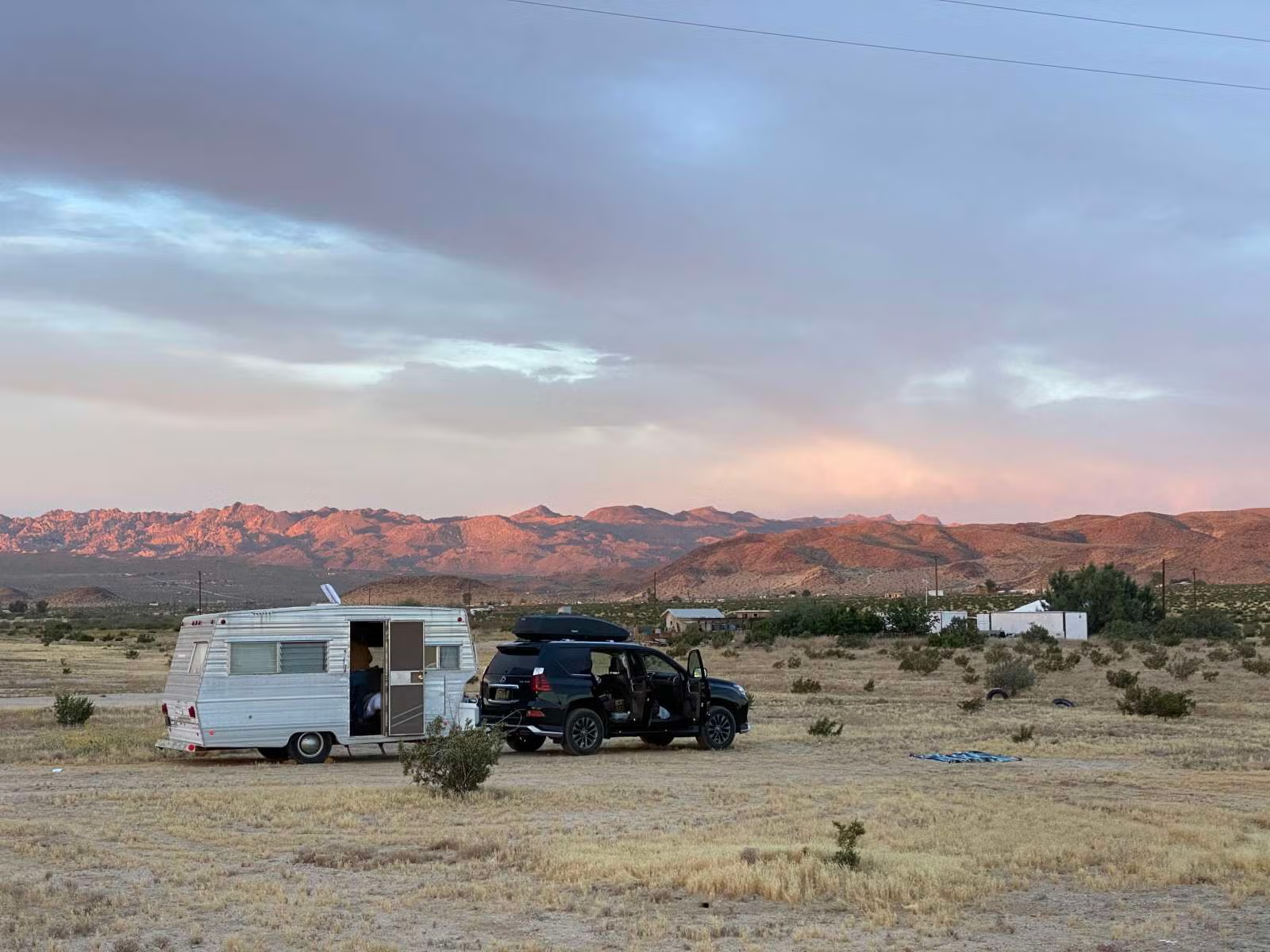
A byway can be great in an RV. But often “scenic” just means “there will be some steep switchbacks up ahead.” Before heading out, check for grade, bridge, tunnel and vehicle restrictions. A route may be easy in a sedan but tough in a long motorhome or with a trailer.
Think about overnight plans. A state park, national forest, small-town RV park or private campground could be good bases from which to take a piece of a byway. If there’s a stretch of a byway that’s too steep or too narrow, there is no need to push through it. Park nearby, use a smaller vehicle and/or choose another route through the area where it could still be appreciated.
How to get more from the miles
Curiosity is key to appreciating a scenic byway. Even if a historical marker is not recognized, stop and read it. Rather than take a picture from the parking lot, walk up the short trail to the overlook. And ask a server, a ranger, a person at the campground or a person at the local bookstore what they’d recommend.
And do not feel the need to schedule every minute of the trip. Maybe at a roadside farm stand lunch could be picked up. Maybe a sign painted on a pole will lead to a waterfall. Maybe the pie in one of the towns on the drive is better than anywhere else on the route. And maybe a mural, museum or bookstore in that town would be worth checking out.
Leave some time in the day for the road to surprise. But be considerate of others on the road. Pull off at pullouts, don’t stop in the travel lane. Don’t trespass on private property or on tribal lands. At campgrounds and overlooks, keep it down, pack out trash and leave cultural and natural sites as they were found. When travelers help preserve the value of scenic byways, they’re worth driving again and again.
A scenic byway is an invitation, not a checklist
There is no single right way to travel a byway. Some people will spend a week tracing a nationally designated route from end to end. Others will borrow a 20-mile segment for a sunset drive after a day in a national park. Both count.
The useful question is not whether you can see every stop. It is whether the road gives your trip a stronger sense of place. Choose the turn that promises a story, leave room for the unexpected pullout, and let the miles become part of what you remember.
Meet the Author

Get more vacation inspiration straight to your inbox.
By entering your email, you agree to receive marketing emails from Roadtrippers. You can unsubscribe at any time. See our Privacy Policy.


 Download from Play Store
 Download from Apple App Store
