The Road Tripper’s Guide to Windshield Wipers: What to Know Before You Hit the Highway
Everything you need to know about wiper blades before you hit the open road

You’ve mapped your route, loaded up the cooler, and topped off the tank. But when’s the last time you looked at your wiper blades?
It’s one of the most overlooked parts of road trip prep, and one of the most important. A sudden rainstorm, a wave of bugs across the windshield, or a dusty stretch of highway can test your wipers fast. If they’re not up to the job, you’re not just annoyed. You’re a safety risk.
Here’s what every road tripper should know before pulling out of the driveway.
How Often Should You Replace Wiper Blades?
Most automotive experts recommend replacing wiper blades every 6 to 12 months. But if you’re putting serious road trip miles on your vehicle, you might hit that threshold faster than you think.
Highway driving accelerates wear in ways that city driving doesn’t. High speeds increase the stress on the rubber edge. Long drives through rain, bugs, heat, and temperature swings all chip away at the blade’s ability to make clean contact with the glass.
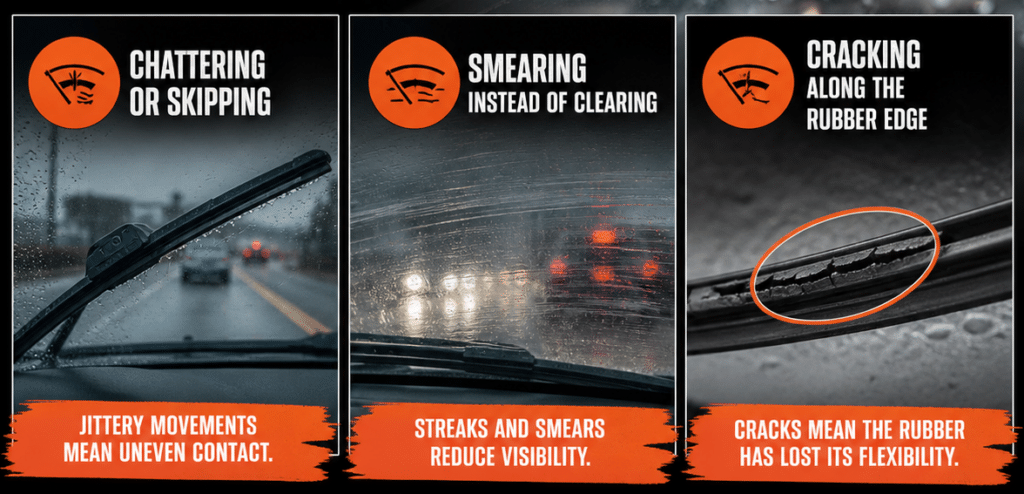
The signs are easy to spot once you know what to look for: streaking across the windshield, a chattering or skipping motion during operation, smearing instead of clearing, or visible cracking along the rubber edge. If you’re seeing any of those, your blades are overdue.
The good news: replacement is cheap, quick, and the difference is immediate. Don’t wait until you’re 200 miles from home in a downpour to find out your blades are shot.
How to Find the Right Wiper Blade Size
Not all wiper blades fit all vehicles. Every car and truck is designed with specific blade lengths to ensure the wiping pattern actually clears the driver’s field of view. Get it wrong and you either leave blind spots on the glass or the blade interferes with the windshield frame.
Finding the right fit is straightforward. Your owner’s manual lists the correct sizes. Most automotive parts retailers have in-store fitment guides. And brands like Scrubblade offer online vehicle finder tools where you enter your year, make, and model, and it returns the correct blade length and wiper arm style.
That last part matters: blade length and arm compatibility are both important. One without the other and you’re still going to have a problem.
What Makes a Wiper Blade Actually Good?
A quality wiper blade should move silently across a wet windshield and leave it clear. That sounds simple, but it requires a few things working together.
The rubber compound has to stay flexible across a wide temperature range. Too hard in the cold or too soft in the heat, and the blade starts skipping or chattering. The blade structure also needs to maintain consistent pressure across the entire curved windshield surface, because uneven contact is what causes those streaks.
Then there’s what’s actually on the windshield. Rain is one thing. But on a highway drive, you’re also dealing with bugs, road film, and dust that builds up fast and doesn’t wipe off easily. Traditional blades are designed to move water. That’s it.
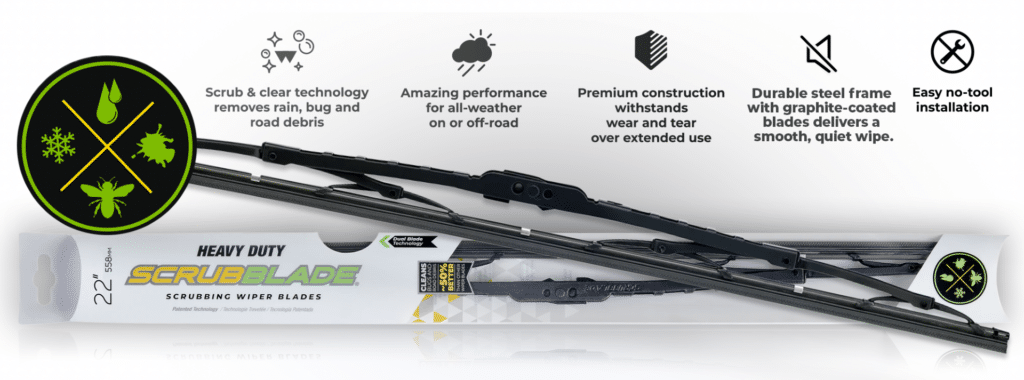
That’s the gap Scrubblade’s design addresses. Their blades incorporate a dual-textured surface: a smooth wiping edge for water, and a patented scrubbing surface with raised elements that help break up bugs, dirt, and road grime during the wipe. It’s a meaningful difference for anyone doing long highway drives where windshield buildup is constant.
Rubber vs. Silicone: Why the Material Matters
When you’re shopping for replacement blades, you’ll run into two main materials: rubber and silicone. It’s worth understanding the difference.
Rubber blades have been the standard for decades. They’re affordable and functional. The downside is that rubber degrades faster under environmental stress. It hardens in the cold, softens in heat, and cracks with UV exposure. That’s why the 6-to-12-month replacement window exists.
Silicone blades are engineered to resist those same conditions. They maintain flexibility across a wider temperature range, hold up better against UV, and generally last longer. For road trippers who don’t want to think about wiper blades more than once a year, silicone is worth the upgrade.
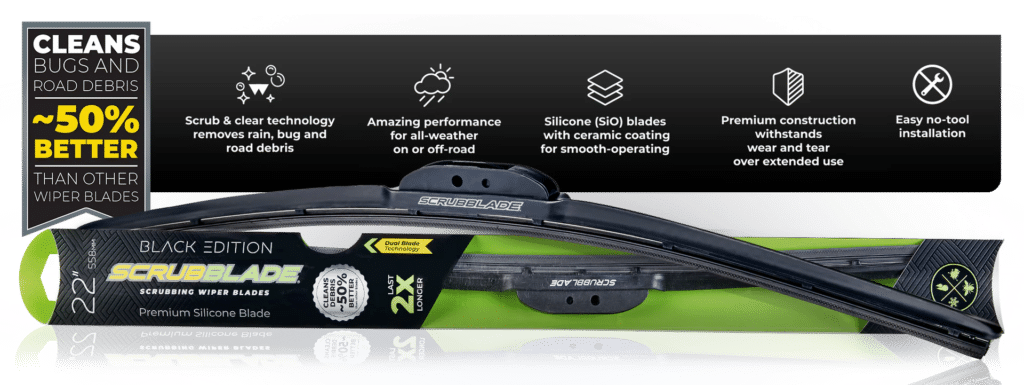
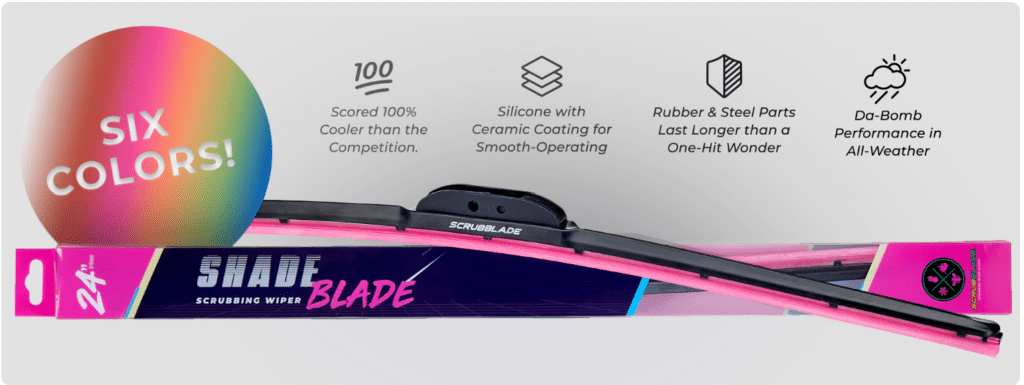
Scrubblade’s Black Edition and ShadeBlade models both use silicone construction, pairing that durability with their scrubbing technology. It’s a combination that makes sense for drivers who log serious miles. Get Scrubblade’s Black Edition at your local Walmart.
Which Scrubblade Model Is Right for You?
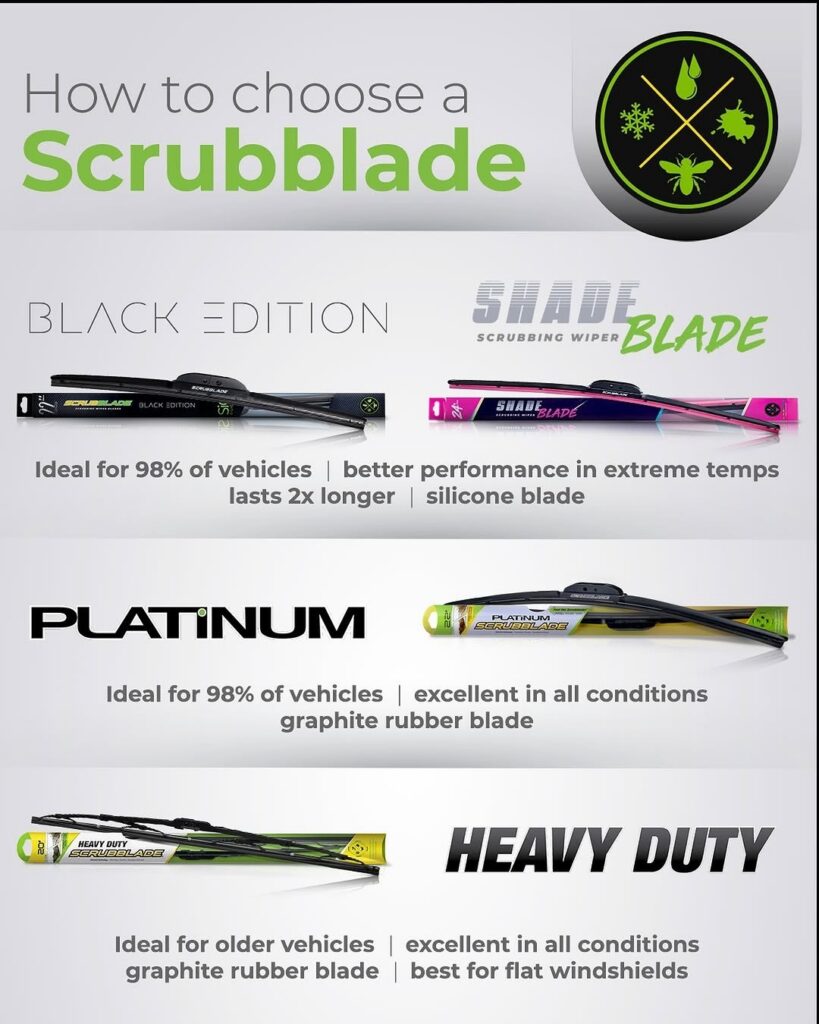
Scrubblade offers four models, each targeting a different driver profile:
Platinum is their all-season workhorse with durable frame construction, reliable performance across weather conditions, and a solid pick for everyday drivers who want a dependable year-round blade.
Heavy Duty is built for trucks, SUVs, and commercial vehicles, or any vehicle where the wiper arm spring has weakened over time. Stronger pressure, reinforced construction, designed for large windshields and demanding conditions.
Black Edition is their premium option with silicone construction for extended durability, UV resistance, and aerodynamic design. Best for drivers in extreme climates or anyone who wants to replace blades less often.
ShadeBlade delivers the same silicone performance as the Black Edition with one addition: color options. Popular with automotive enthusiasts who want both function and a clean look.
Before Your Next Road Trip: A 5-Minute Wiper Check
Before you leave, take a few minutes to run through this quick check:
Inspect the rubber edge of each blade for visible cracks or wear. Run the wipers and watch for streaking, skipping, or smearing. Top off your windshield washer fluid. And if the blades are more than a year old and you’ve put significant miles on them, just replace them. The cost is minimal and the peace of mind is worth it.
Clear visibility isn’t just about comfort on a long drive. It’s the difference between reacting in time and not. A two-minute rainstorm three states from home shouldn’t be the thing that ends your trip early.
Meet the Author

Get more vacation inspiration straight to your inbox.
By entering your email, you agree to receive marketing emails from Roadtrippers. You can unsubscribe at any time. See our Privacy Policy.



 Download from Play Store
 Download from Apple App Store